Germany adopts MiSpeL rules to advance electricity-market participation for storage and bidirectional charging
MiSpeL addresses accounting for renewable electricity stored together with grid electricity, but direct marketing, metering upgrades, transition periods and EU approval will determine when services become available.
By Global Bole News
Research and compilation
If a battery stores both electricity from rooftop solar panels and electricity purchased from the grid, how should subsidies and charges be calculated when it feeds electricity back? The MiSpeL rules adopted by Germany's Federal Network Agency on October 1 address precisely these seemingly technical details, which directly determine whether storage and bidirectional charging can participate in the electricity market.1
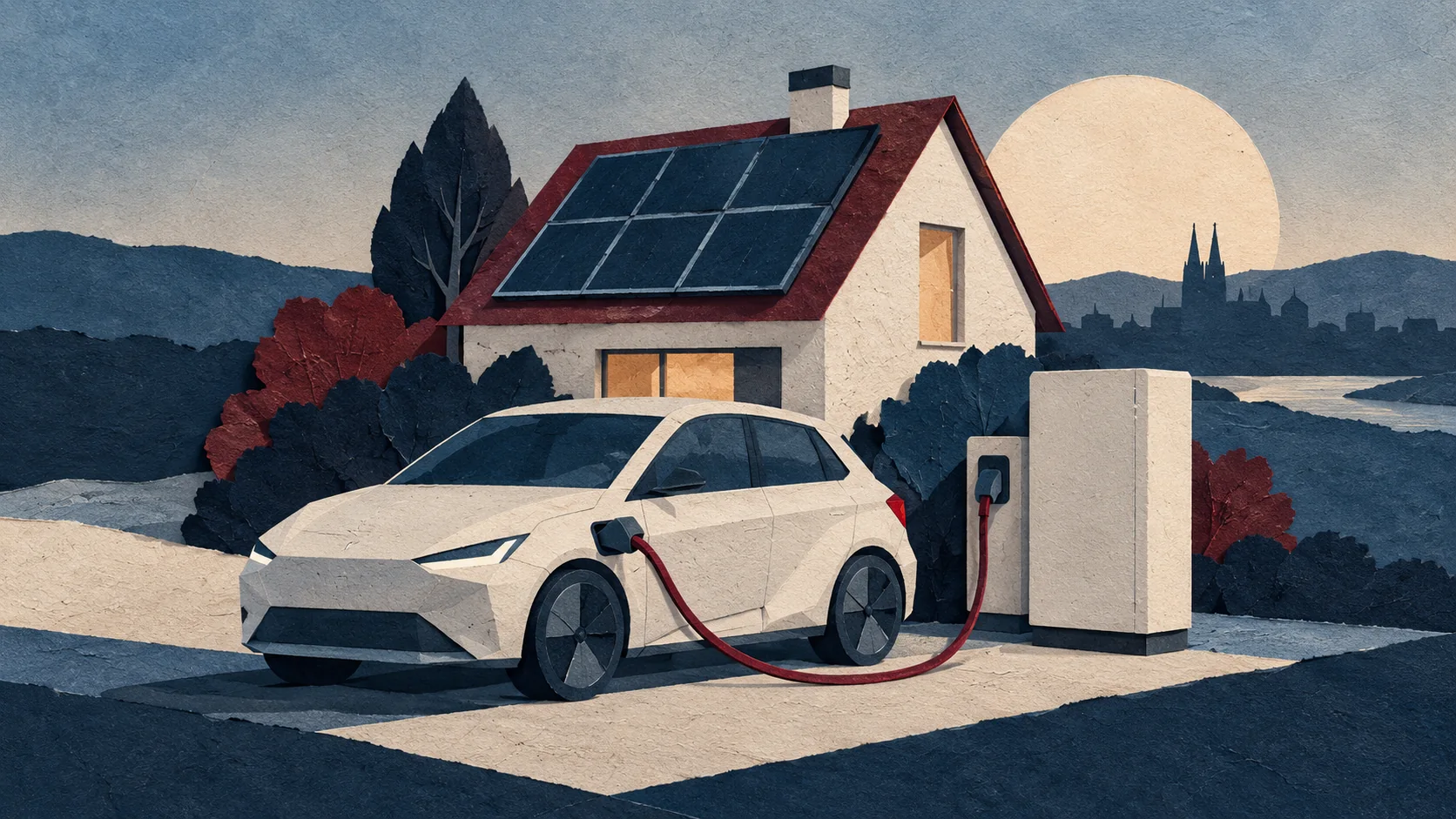
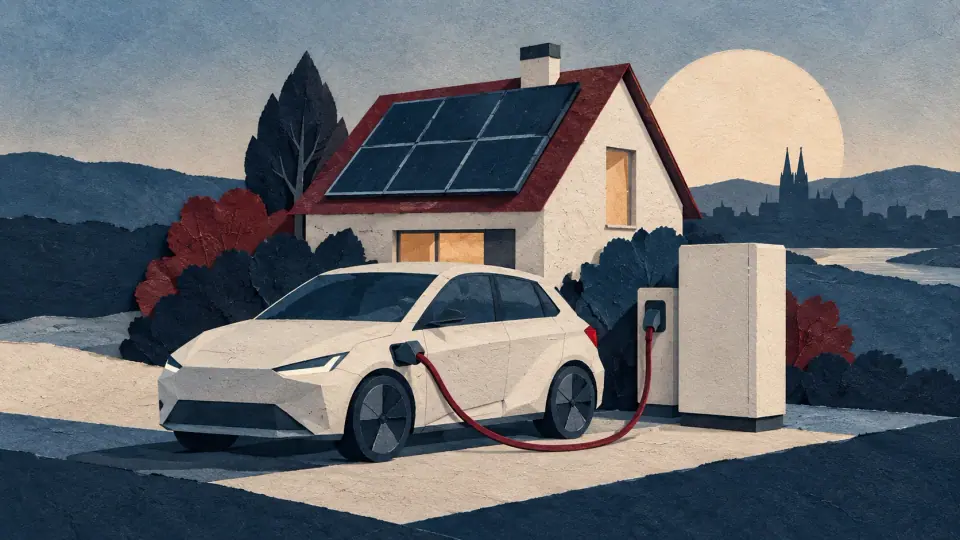
Figure: AI-generated conceptual illustration: electric vehicle charging, home energy storage and rooftop solar power.
Clearer accounting is finally available for mixed electricity storage
According to the agency, retaining the relevant subsidies under the Renewable Energy Sources Act (EEG) previously required storage facilities to store only renewable electricity, and bidirectional charging points were excluded from that model. The restrictions were not merely technical: even if equipment could both charge and discharge, subsidies and charges could not be settled accurately without distinguishing the sources of the electricity.1
MiSpeL creates a path for mixed use by distinguishing renewable electricity eligible for subsidies from electricity fed back to the grid that qualifies for credits. Eligible renewable electricity held temporarily in storage can still receive subsidies; electricity first drawn from the grid and then fed back can qualify for offsets against the relevant levies and network charges under the rules. For storage operators, this provides a clearer regulatory basis for using the same equipment both for self-consumption and for market trading.
There is, however, an important condition on eligibility: the new arrangements apply to users selling electricity directly on the market, not to those receiving fixed feed-in tariffs. Households that already have solar panels and electric vehicles must first check their electricity sales arrangements; they cannot simply assume their existing contracts allow them to participate.2
Precise metering and the simplified option each involve trade-offs
The precise differentiation option covers installations of all sizes, using digital metering to identify electricity flows. It generally requires two meters, although one may suffice in certain special cases. The simplified flat-rate option is intended for small solar systems of up to 30 kilowatts peak, covering households and small businesses, and can generally calculate the relevant amounts using one meter at the connection point. For small users, fewer metering upgrades make it easier to keep participation costs manageable.1
The fee relief also has clear limits. Electricity used to drive an electric vehicle, and the associated losses, remain subject to levies and network charges. Electricity charged elsewhere cannot qualify for EEG subsidies simply because it is fed back through a home charging point. These distinctions are intended to allow eligible grid exports and ordinary electricity consumption to be settled separately.2
Once settlement is possible, the returns still need to add up
MiSpeL's most practical value is in connecting equipment capabilities with market settlement. Whether a battery can charge and discharge bidirectionally is only the first step. Operators also need to know which electricity remains eligible for subsidies, which charges can be offset, and who is responsible for metering and payment. Clearer rules make it easier for service providers to turn technical solutions into products that customers can sign up for.
That does not make returns automatic. The difference between charging at low prices and exporting at high prices must still cover equipment, metering, service fees, energy losses and the costs of battery use. The capacity a household can make available is also constrained by travel needs and available charging time. When comparing options, users should ask about settlement methods, who bears the costs and how revenues are shared, rather than focusing only on advertised potential earnings.
Implementation will still take time. The transition period runs until the end of September 2027; earlier use requires agreement from the grid operator and the metering-point operator. The simplified flat-rate option must also await European Commission state-aid approval for its legal basis.1
The adoption of the rules is therefore an important step, but the next questions are more specific: when operators will start accepting applications, how equipment compatibility and metering requirements will be implemented, and whether products with transparent terms and calculable costs will emerge. Only when these elements fit together will bidirectional charging become an everyday option for more users.
Source notes
-
October 1, 2026, Germany's Federal Network Agency, Bundesnetzagentur erlässt Festlegung zur Marktintegration von Stromspeichern und Ladepunkten (MiSpeL). ↩ ↩2 ↩3 ↩4
-
October 1, 2026, Germany's Federal Network Agency, MiSpeL: BNetzA eröffnet die aktive Nutzung von Speichern und bidirektionalen Ladepunkten. ↩ ↩2