India approves Green Energy Corridor Phase III, advancing grid and storage construction together
India’s Green Energy Corridor Phase III plans 50 GWh of battery storage and expanded intra-state transmission to support the evacuation of 135 GW of renewable power. Funding, electricity demand and implementation mechanisms still require separate examination.
By Global Bole News
Research and compilation
India's cabinet approved the Green Energy Corridor Phase III scheme on September 30, planning investment of about 1.864 trillion rupees to strengthen transmission networks within states and union territories and install 50 gigawatt-hours of battery storage. Under the government's announced arrangements, the projects will support the connection and evacuation of up to 135 gigawatts of renewable power, with completion targeted for fiscal year 2032–2033. This is a construction program for the coming years, and the capacity concerned should not be treated as already operational.1
The funding plan lists 136,378 crore rupees for intra-state transmission and 50,000 crore rupees for battery storage. Central government support of about 540.8 billion rupees should not be added on top of the project total. The announced total of 186,405 crore exceeds the sum of the transmission and storage components, 186,378 crore, by 27 crore (270 million rupees), with no explanation given. The original figures are retained here without attempting to fill in the difference.1
Why the grid and storage need to be built together
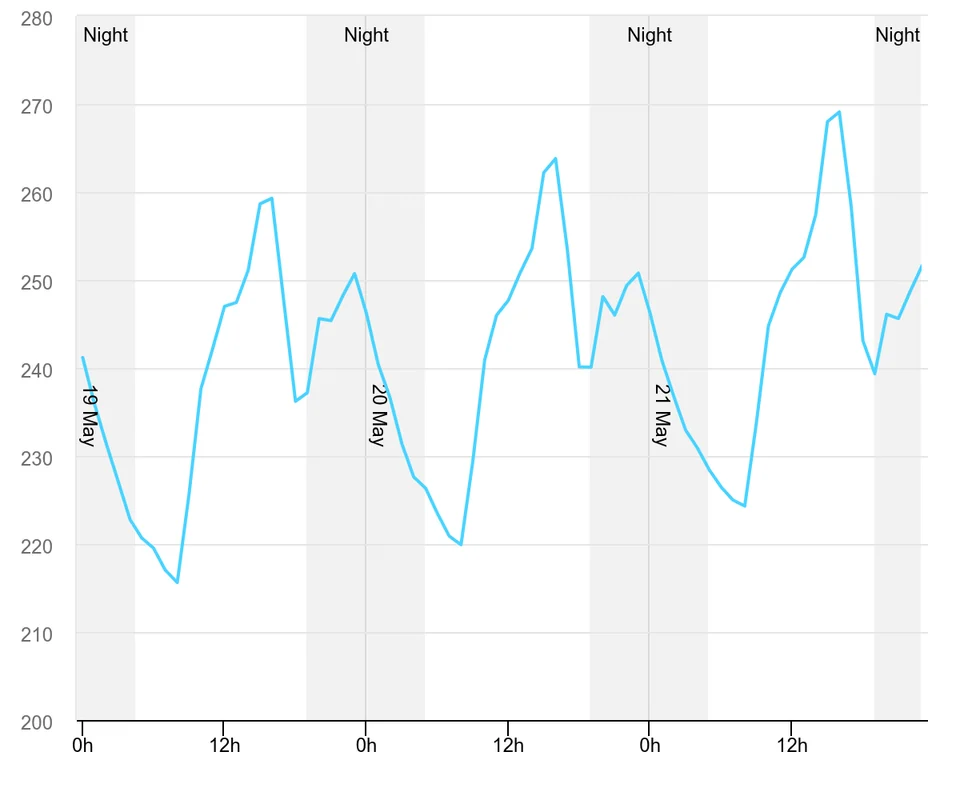
The policy comes against a backdrop of continuing growth in India's electricity demand and a mismatch in timing between solar generation and evening loads. An IEA analysis published in June noted that India's peak electricity demand reached 270 gigawatts on May 21 this year, well above approximately 180 gigawatts in 2019. Solar power helps meet daytime demand, but air-conditioning use remains high on summer nights, and the grid needs to provide enough electricity after sunset.2
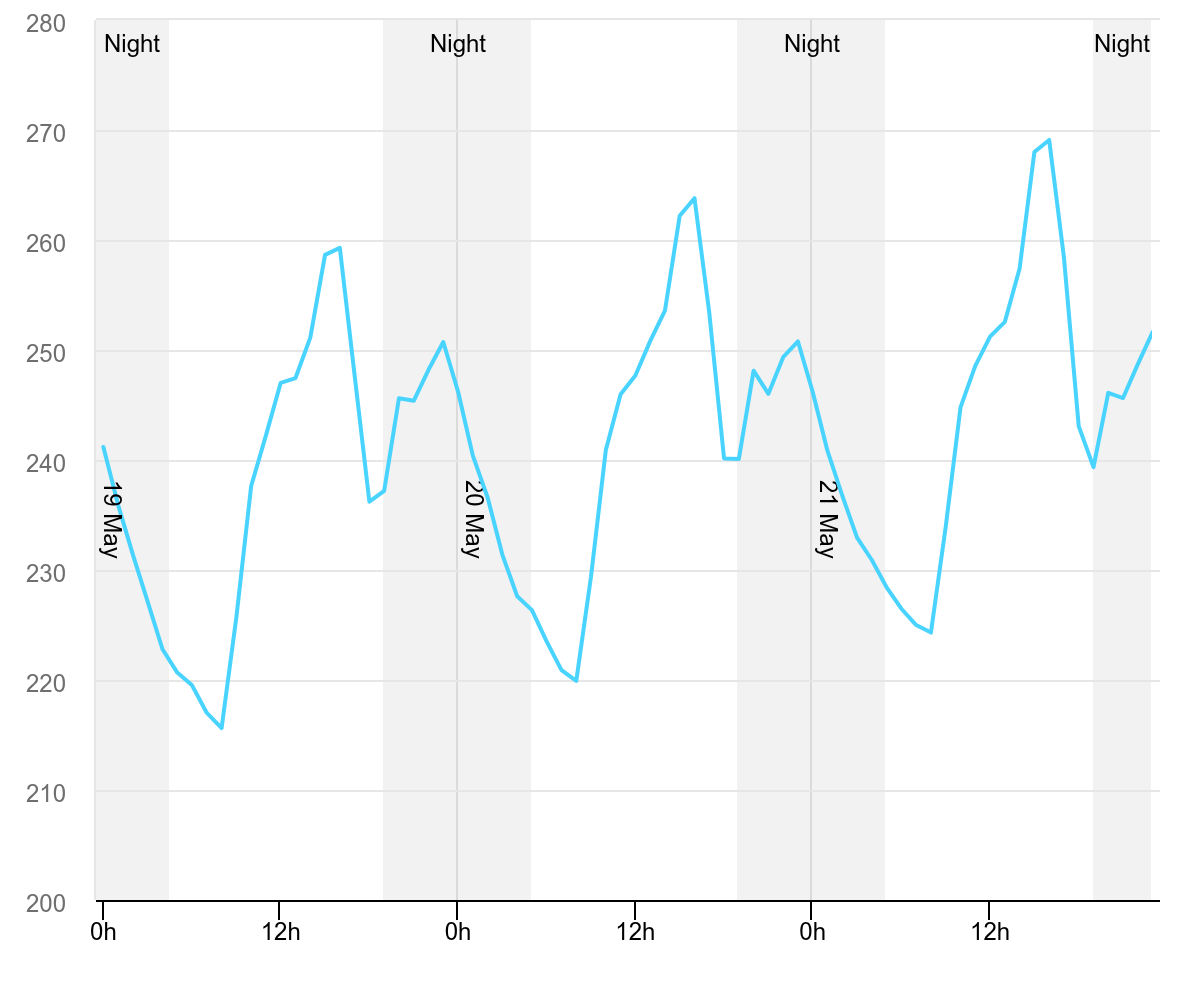
Figure: Original International Energy Agency chart showing hourly electricity demand in India from May 19 to 21, 2026; the vertical axis is in gigawatts (GW), and gray areas indicate nighttime. Source and chart: IEA, Hourly electricity demand in India in mid-May 2026, based on analysis of the Real-Time Electricity Tracker; CC BY 4.0.2
This also explains why storage and transmission must be discussed together. Transmission infrastructure determines where electricity can be sent, while storage determines when it can be released. Adding solar capacity alone does not automatically remove pressure on evening supply, and building transmission lines alone cannot shift midday generation to nighttime. The IEA considers that batteries can reduce peak demand and ease the pressure on coal-fired plants to ramp up quickly at sunset.2
Looking at medium-term demand, the IEA's Electricity 2026 report projects average annual growth of about 6.4% in India's electricity demand from 2026 to 2030, with annual consumption increasing by more than 570 terawatt-hours over the five-year period. This is a forecast rather than growth already realized, but it indicates that transmission expansion must accommodate both new generation and new loads. In a rapidly growing electricity system, delays in grid construction could undermine the practical value of new generation projects.3
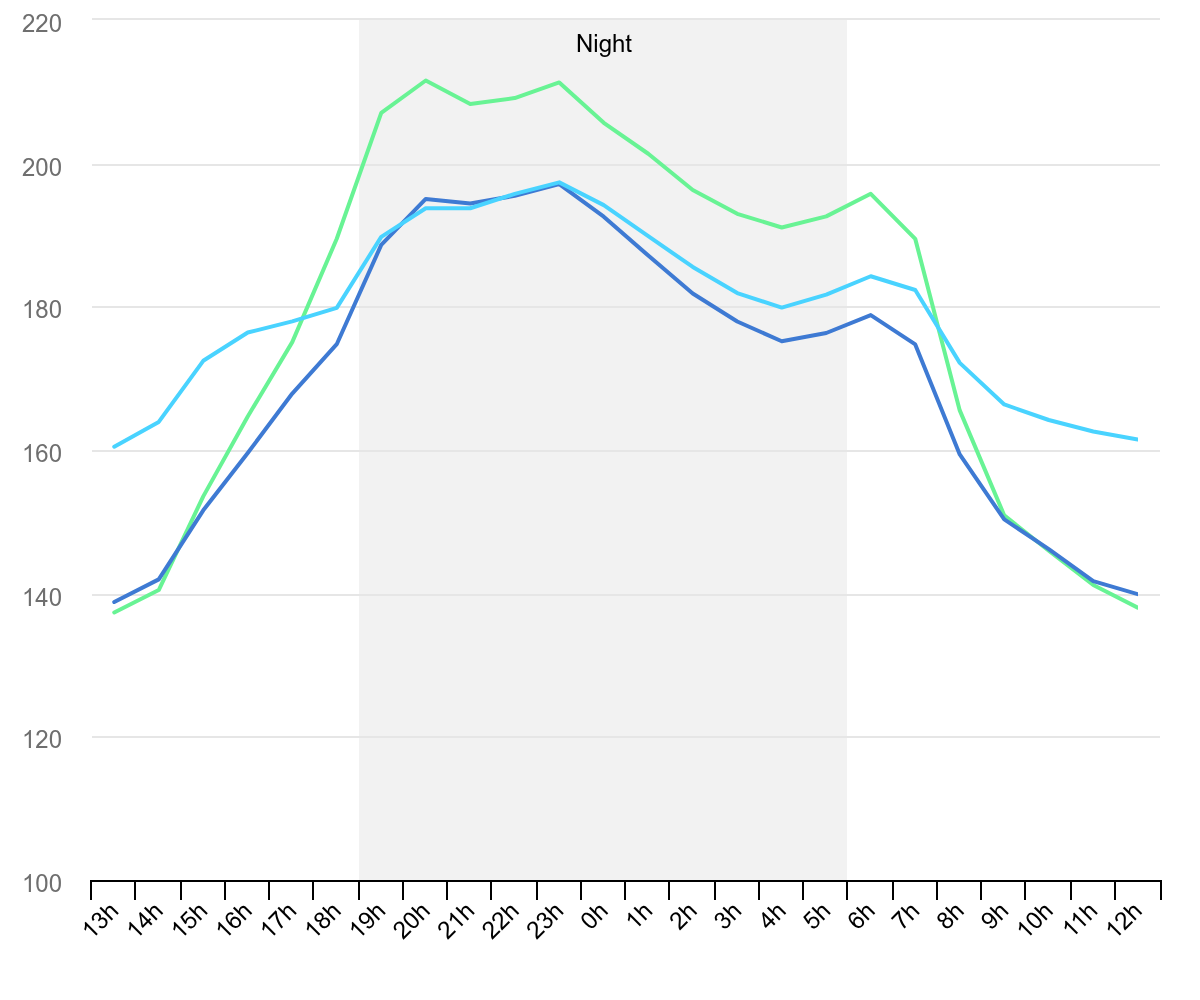
Figure: Original International Energy Agency chart showing average summer net load in India in 2024–2026; the vertical axis is in gigawatts (GW), the light blue line is 2024, dark blue is 2025, green is 2026, and gray areas indicate nighttime. Source and chart: IEA, Average summer net load in India by year, based on analysis of the Real-Time Electricity Tracker; CC BY 4.0.2
From an approved plan to actual operation
The implementation approach also deserves attention. The government has assigned state transmission companies to coordinate delivery, with new transmission projects procured through tariff-based competitive bidding and upgrades to existing facilities handled under a cost-plus mechanism.1 The two mechanisms respectively address competition for new projects and modernization of the existing network. Subsequent monitoring should focus on tenders, coordination between construction projects and actual commissioning dates, rather than simply comparing the size of approved budgets.
Another potential source of confusion is the units: 135 gigawatts describes the renewable power capacity the scheme is intended to support, while 50 gigawatt-hours describes the energy the batteries can store. The two cannot be added together or directly compared in size. The current announcement is insufficient to calculate how many hours of additional electricity supply the country would gain, and 135 gigawatts should not be interpreted as an equivalent amount of power-plant capacity built directly under this scheme.
The significance of the plan is that it more closely connects an expansion of generation capacity with improvements in electricity availability. Whether it translates into reliable supply will ultimately depend on whether transmission and storage are matched to demand, when they come online, and how much they actually improve curtailment and peak-time supply once operating. Investment approval is the starting point; the system's operating performance will provide the basis for assessing the policy later.
Source notes
-
India's Press Information Bureau (PIB), Cabinet approves Green Energy Corridor Phase-III scheme for Development of Intra-State Transmission System with Battery Energy Storage Systems, September 30, 2026, 15:12 (as displayed on the page). ↩ ↩2 ↩3
-
International Energy Agency, Thomas Spencer and Anthony Vautrin, India’s electricity demand grows at night: Managing rising cooling demand, June 3, 2026. ↩ ↩2 ↩3 ↩4
-
International Energy Agency, Electricity 2026, Demand chapter, February 6, 2026. ↩