UNFCCC Launches Second Global Stocktake at COP31 in Antalya as China Reviews 459-Kilometer East China Sea Subsea Gas and CO2 Terminal Expansion
UN Climate Change Executive Secretary Simon Stiell launched the two-year Second Global Stocktake at COP31 in Antalya, while China's Ministry of Ecology and Environment opened public review on CNOOC's 459-km East China Sea subsea gas pipeline and 5-billion-cubic-meter Ningbo terminal expansion with CO2 storage integration.
By 全球伯乐 News
Source compilation
On this page
On November 18, 2026, the United Nations Framework Convention on Climate Change (UNFCCC) Secretariat formally launched the two-year Second Global Stocktake (GST2) under the Paris Agreement during a high-level event at the COP31 climate summit in Antalya, Türkiye. On the same day, the Ministry of Ecology and Environment of the People's Republic of China (MEE) opened its formal pre-approval environmental impact assessment (EIA) review for CNOOC China Limited's XHZS development in the East China Sea, detailing a new 459-kilometer subsea natural gas trunkline, a 5-billion-cubic-meter-per-year onshore processing expansion in Ningbo, and dedicated carbon dioxide storage piping12.
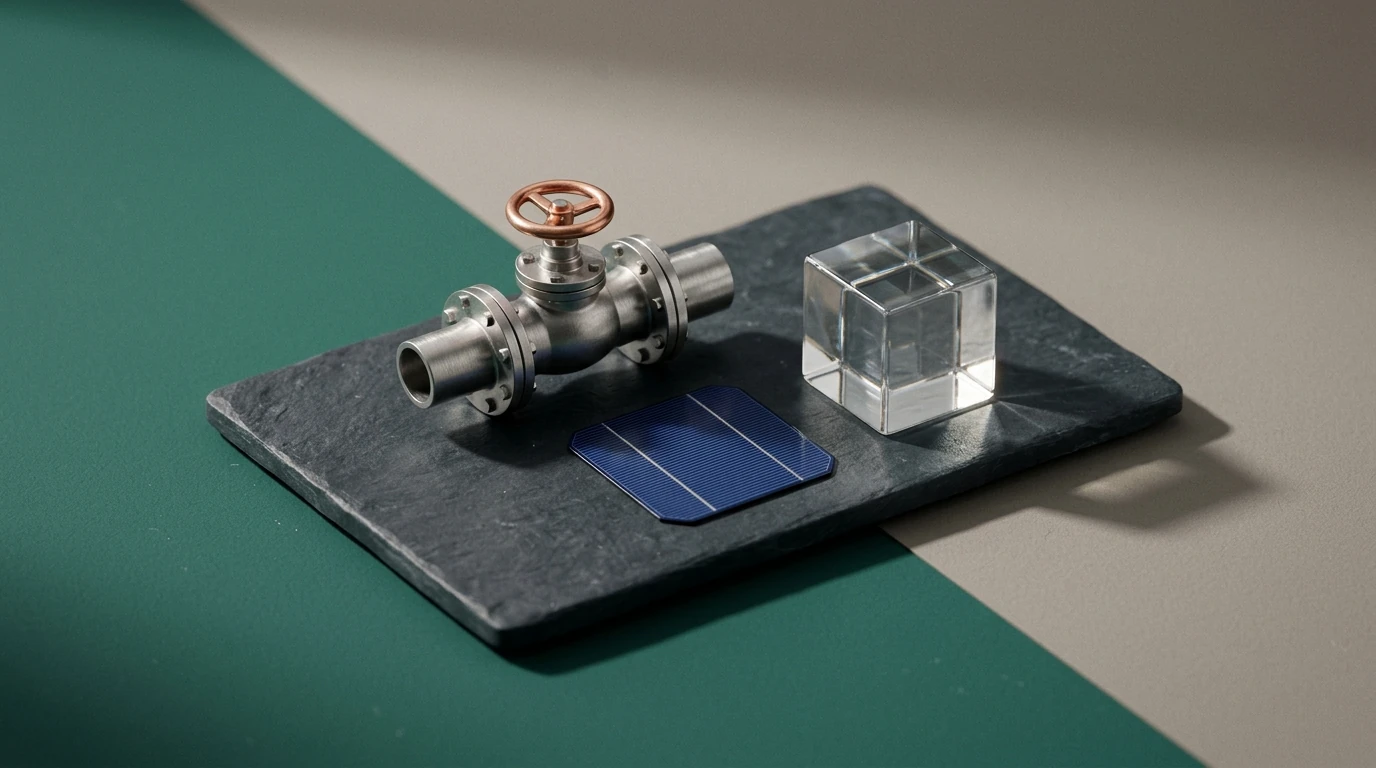
AI-generated editorial illustration: a miniature brushed stainless-steel flanged pipeline valve with a copper handwheel, an unbranded monocrystalline solar wafer, and a clear optical glass cube on dark charcoal slate symbolize the COP31 Second Global Stocktake renewable goals alongside regulated subsea gas and onshore CO2 storage infrastructure, not an actual photograph from Antalya or the East China Sea.
COP31 in Antalya Initiates Second Global Stocktake as 90 Percent of Parties Embed First-Stocktake Goals
Speaking at the Antalya launch, UN Climate Change Executive Secretary Simon Stiell described the Global Stocktake as the central ratchet mechanism of the Paris Agreement, noting that the second cycle beginning at COP31 will run for two years before concluding at COP33. Stiell reported that the first Global Stocktake has already reshaped national energy planning: fully 90 percent of Parties submitting updated Nationally Determined Contributions (NDCs) explicitly incorporated the first stocktake's headline energy and adaptation mandates1.
According to the UNFCCC assessment, those national commitments reflect the global pledge to triple renewable power generation capacity and double the annual rate of energy efficiency improvements by 2030, alongside commitments to transition away from fossil fuels and implement adaptation measures under the UAE Framework for Global Climate Resilience. Stiell stressed that the Second Global Stocktake will rely heavily on updated scientific inputs from the Intergovernmental Panel on Climate Change (IPCC) while pressing for verifiable finance, technology transfer, and capacity building for developing economies1.
China Reviews 459-Kilometer East China Sea Gas Trunkline With Marine Spawning Closures and CO2 Tank Farm Routing
At the infrastructure implementation level, China's Ministry of Ecology and Environment public review notice—running for five working days from November 18 to November 24, 2026, on the EIA compiled by CNOOC Research Institute—illustrates how major offshore gas supply projects are being bound by stricter carbon-handling and marine biodiversity mandates. Located in the East China Sea and Ningbo, Zhejiang Province, the XHZS project comprises seven new offshore platforms, four multiphase infield pipelines, a 23.2-kilometer subsea oil pipeline connecting the HG CEP platform to the ZZ CEPA platform, and a 459-kilometer subsea natural gas trunkline running from HG CEP directly to the Ningbo onshore terminal2.
Crucially, the MEE environmental review dossier pairs the Ningbo terminal's 5-billion-cubic-meter annual gas processing expansion with a new 225-meter inlet pipeline (including a 150-meter horizontal directional drilling crossing) and a 75-meter pipe rack routed directly to an onshore carbon dioxide (CO2) tank farm to capture and isolate separated CO2 streams. To protect marine ecosystems under national standards GB 4914-2008 and GB 18420.1-2009, the EIA mandates that all non-compliant oil-based drill cuttings and fluids be shipped ashore for disposal, while subsea trenching is strictly prohibited during the special protection window of the Xiangshan Port Spanish Mackerel National Germplasm Reserve (March 1 to July 31), inside the core zone of the East China Sea Hairtail Reserve (April 16 to July 1), and throughout the May peak spawning season2.
Source notes
-
2026-11-18 · “An ambitious outcome is within reach,” UN Climate Chief at COP31 event to launch the second global stocktake · United Nations Framework Convention on Climate Change (UNFCCC). ↩ ↩2 ↩3
-
2026-11-18 · 2026年11月18日生态环境部关于XHZS项目生态环境影响评价文件拟进行审查公示 · Ministry of Ecology and Environment of the People's Republic of China (MEE). ↩ ↩2 ↩3