COP31 Unveils Global Electrification Package and $10 Trillion Grid Target as IEA WEO-2026 Models Hormuz Shock and UNFCCC Marks 25 Years of LDC Adaptation
At COP31 in Antalya, IRENA presented the Global Electrification Delivery Package backed by over 150 countries, 37 cities, and $156 billion in annual utility commitments alongside the D-GRIDs initiative, while the IEA World Energy Outlook 2026 modeled Strait of Hormuz oil flow contractions and the UNFCCC marked 25 years of Least Developed Countries adaptation support.
By 全球伯乐 News
Source compilation
On this page
Between November 19 and November 20, 2026, multilateral energy agencies and climate negotiators at COP31 in Antalya released landmark capital commitments and scenario assessments reshaping global power grids, fossil-fuel trade routes, and climate adaptation finance. The International Renewable Energy Agency (IRENA) unveiled the COP31 Global Climate Action Agenda Electrification Delivery Package uniting more than 150 countries and the European Union, 37 cities, and over 260 corporations. On the same day, the International Energy Agency (IEA) launched its flagship World Energy Outlook 2026 (WEO-2026) evaluating how prolonged Strait of Hormuz disruptions accelerate electrification, while on November 20 the UNFCCC secretariat commemorated 25 years of the Least Developed Countries (LDCs) adaptation framework123.
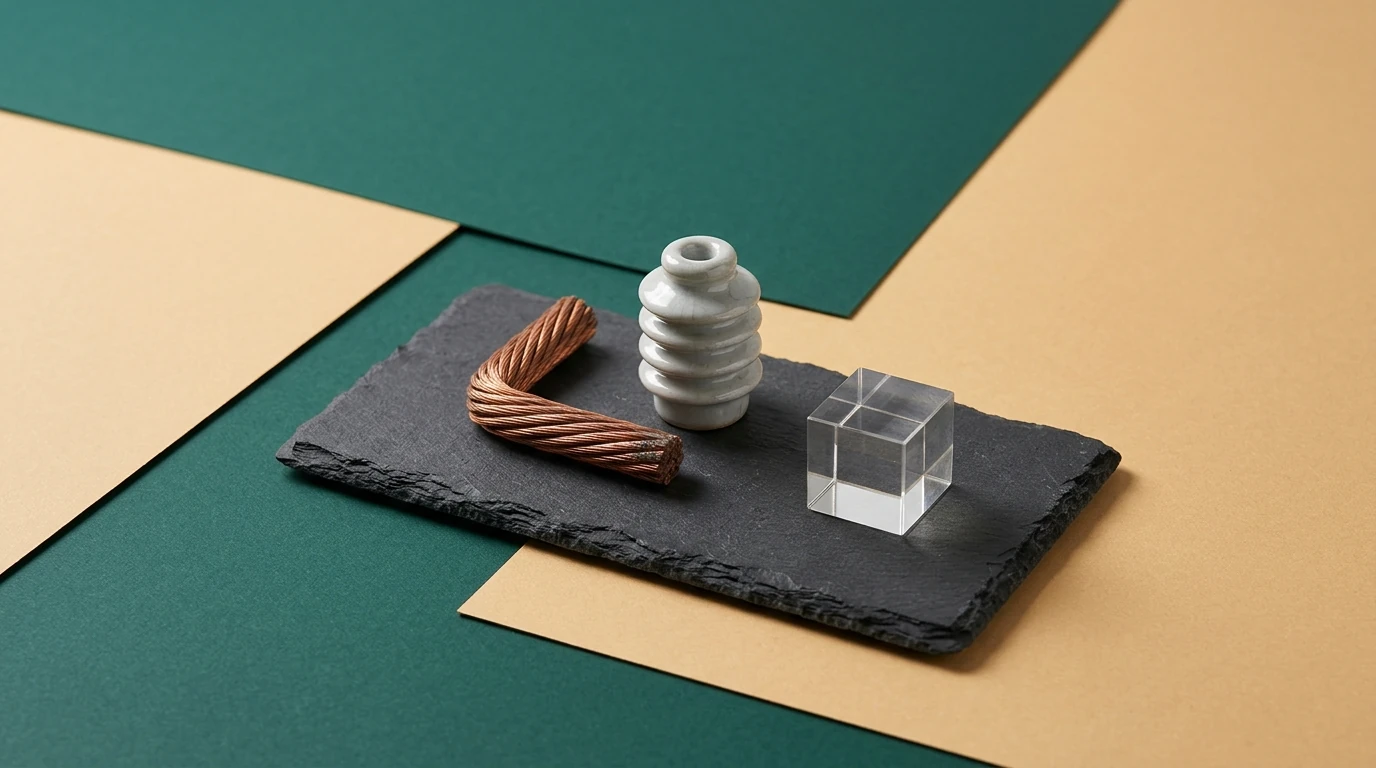
AI-generated editorial illustration: a braided bare copper high-voltage conductor coil, a glazed white porcelain ribbed insulator bell, and a clear solid acrylic block on dark charcoal slate symbolize the COP31 Global Electrification Delivery Package and IRENA D-GRIDs initiative, the IEA World Energy Outlook 2026 scenarios, and 25 years of UNFCCC Least Developed Countries adaptation support, not an actual photograph from Antalya or Paris.
COP31 Electrification Delivery Package Mobilizes $156 Billion in Annual Utility Investments Toward $10 Trillion 2035 Grid Goal
According to IRENA's press release from COP31 in Antalya, the Electrification Delivery Package encompasses economies representing over two-thirds of global GDP, 37 cities under C40 and the Global Covenant of Mayors, and more than 260 businesses generating over $4 trillion in annual revenue. Within the package, the Utilities for Net Zero Alliance (UNEZA) reported constructing more than 21,000 kilometers of new transmission and distribution grids in 2025—a 50 percent jump over 2024—and committed $156 billion per year across power grids, renewable generation, and energy storage (up 5 percent year-on-year and 35 percent above 2024). IRENA Director-General Francesco La Camera also joined the COP31 Turkish Presidency to launch the Decentralised Grids for Energy Transition Initiative (D-GRIDs) and emphasized that achieving the "35-by-35" Global Electrification Pledge requires $10 trillion in cumulative global grid investment by 20351.
Across transport and climate finance, the COP31 electrification delivery ledger compiled by IRENA records 13 zero-emission freight corridors spanning over 29,000 kilometers, 2.1 million electric vehicles sold across ZEV Declaration signatories in the first half of 2026, and a commitment by six cities to deploy 2,200 new electric buses in 2027. Financial institutions announced matching capital pipelines: the Climate Investment Funds (CIF) launched its AMPLIFi capital-market mechanism anchored by a £400 million UK contribution to mobilize up to £5 billion; Allied Irish Banks (AIB) doubled its 2030 green lending target from €30 billion to €60 billion (having deployed €28 billion since 2019); Octopus Energy launched a $600 million Asia Electrification Fund backed by $50 million from Japan; BBVA channeled nearly €60 billion between January 2025 and September 2026; and Sustainable Energy for All (SEforALL) committed to delivering 25,000 Universal Energy Facility connections and 30,000 off-grid connections in Sierra Leone by 2028 to help close the access gap for 655 million people still lacking electricity worldwide1.
IEA WEO-2026 Projects Strait of Hormuz Oil Flows Below 2 Million b/d by 2035 Under Prolonged Shock as UNFCCC Marks 25 Years of LDC Adaptation
Assessing the geopolitical shock to hydrocarbon supply chains, the IEA World Energy Outlook 2026 launch announcement quotes IEA Executive Director Fatih Birol warning that the duration of Middle East hostilities and Strait of Hormuz shipping disruptions will govern the permanence of structural shifts across global energy markets. WEO-2026 highlights that global energy demand for building cooling is overtaking heating demand for the first time in history, while electricity demand has expanded twice as fast as total energy consumption since 2019 and is on track to reach a 30 percent share of final energy consumption by 2035. If Strait of Hormuz shipping risks persist over the long term, bypass pipelines, alternative producers, and accelerated demand displacement could cut Strait oil flows from 20 million barrels per day pre-crisis to 8.5 million barrels per day in 2030 and under 2 million barrels per day by 2035, even as current and stated policy trajectories still point to 2.5 °C to 2.9 °C of global warming2.
On the climate resilience front, the UNFCCC November 20 announcement celebrating 25 years of Least Developed Countries adaptation support reviewed a quarter-century of the LDC work programme, the Least Developed Countries Expert Group (LEG), and the Least Developed Countries Fund (LDCF). Moderated by Lina Yassin of Sudan, the high-level COP31 event noted that more than 140 countries have initiated National Adaptation Plan (NAP) formulation and 84 countries have formally submitted their plans. Alongside remarks by LDC Group Chair Ambassador Adao Soares Barbosa of Timor-Leste, UNFCCC Director of Adaptation Youssef Nassef, GEF CEO Diego Mesa Puyo, and LEG Vice-Chair Payai Manyok John, the secretariat launched the commemorative publication Proven Impact: 25 Years of Supporting the LDCs, calling for predictable grant finance and local institutional capacity to move from planning to implementation3.
Source notes
-
2026-11-19 · COP31: Businesses, governments, investors, cities and initiatives rally behind electrification · International Renewable Energy Agency (IRENA). ↩ ↩2 ↩3
-
2026-11-19 · As an unprecedented shock reshapes the energy world, its duration will determine the scale of the change · International Energy Agency (IEA). ↩ ↩2
-
2026-11-20 · 25 years of Least Developed Countries adaptation support · United Nations Framework Convention on Climate Change (UNFCCC). ↩ ↩2