G20 trade ministers conclude meeting without consensus on capacity issues
Food trade brought consensus, while forced labor and structural overcapacity remain divisive. Reading the G20 chair’s statement requires distinguishing shared decisions, action by a few members and reform proposals.
By Global Bole News
Research and compilation
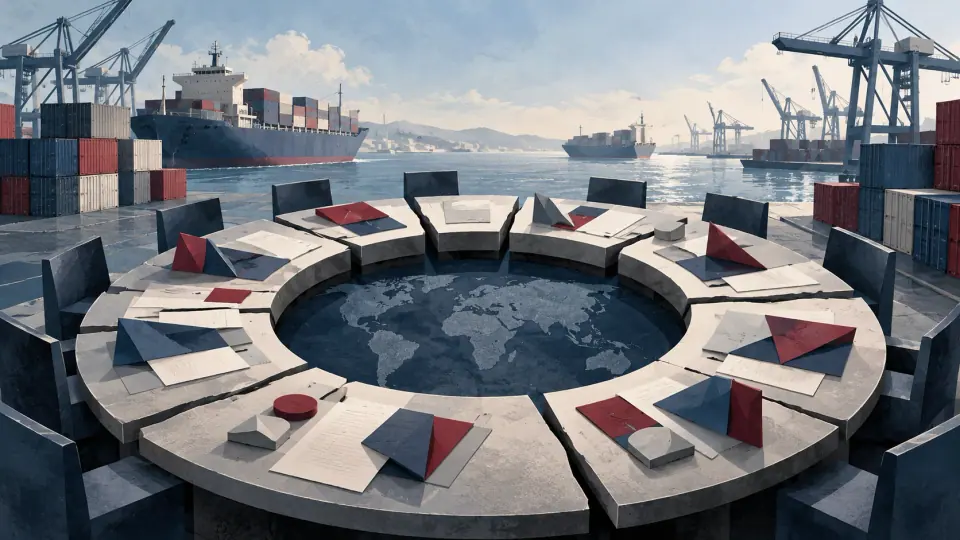
G20 trade ministers reached consensus on food trade, but remained divided over capacity and supply-chain issues. Materials released by the Office of the US Trade Representative on October 2 show that the meeting, held in Milwaukee from September 30 to October 1, agreed to condemn the weaponization of food through coercive trade measures. No unanimous statement was reached on structural overcapacity or forced labor in supply chains.1
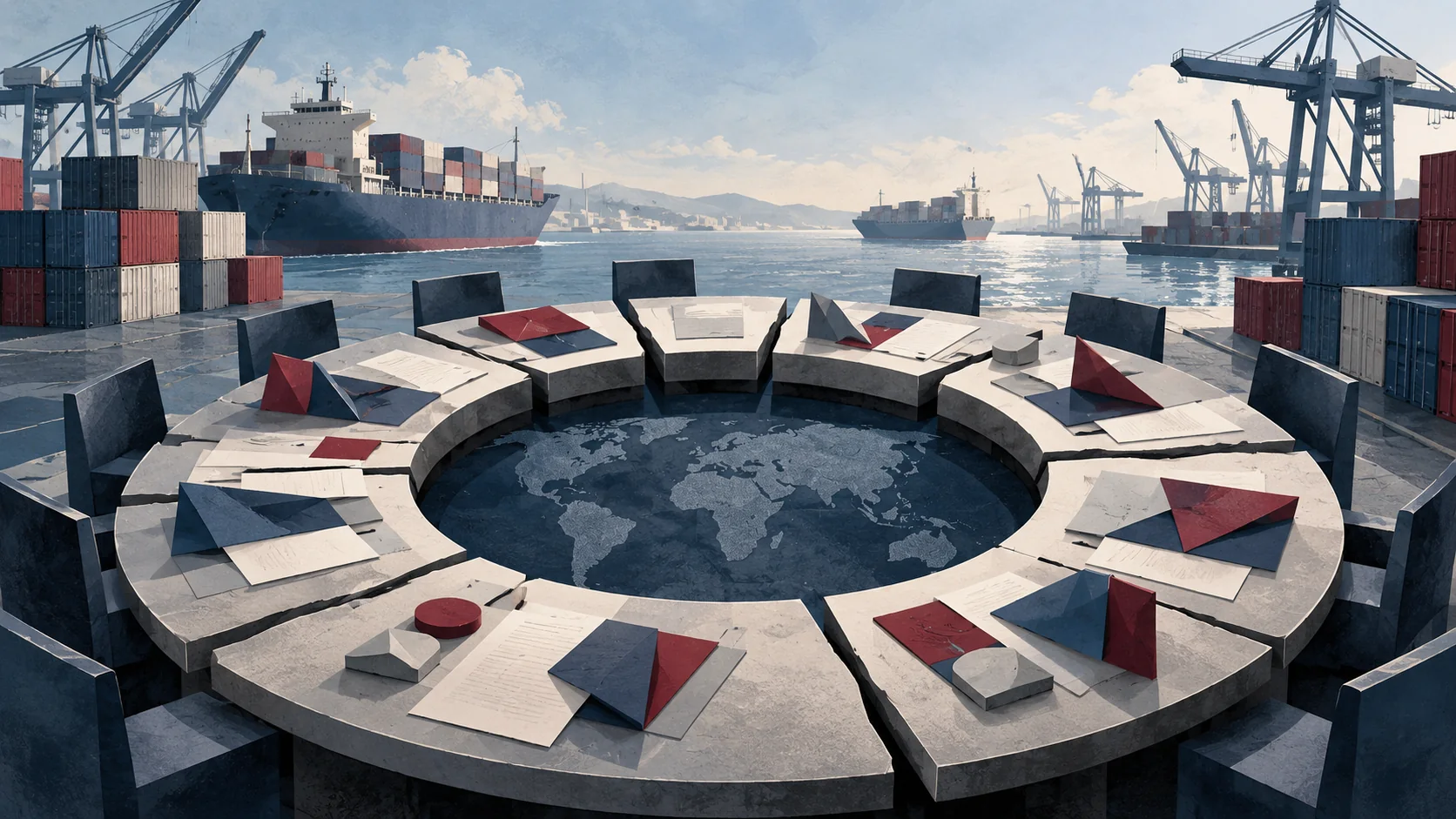
Figure: AI-generated conceptual illustration: port trade and international negotiations still seeking consensus.
The important question is how far the meeting advanced each issue. Expressing a shared position, selecting specific restrictive measures and changing trade rules each require a different threshold to be crossed.
What is a shared position, and what remains the presidency's proposal?
The status of the meeting document first needs to be clarified. The chair's statement was drafted and circulated by the United States, which holds the G20 presidency in 2026. It records discussions among members while also including the presidency's own assessments. Its criticisms and reform proposals therefore cannot all be described as “G20 decisions.”2
The consensus on food was relatively clear: trade in food and agricultural products should not be used as an instrument of economic or political coercion. The conduct described in the document includes slowing, halting or blocking food trade to force concessions on unrelated geopolitical issues.2
The issue of forced labor in supply chains remained at a different stage. The United States, Argentina and Mexico supported the relevant statement, but it did not secure the agreement of the entire G20.1 This means some members are willing to pursue specific action, but there is not yet a unified arrangement covering the whole G20. Both developments are worth reporting, with their respective scope preserved.
The capacity debate concerns how to act
According to the chair's statement, the discussions distinguished cyclical changes in capacity caused by shifts in market supply and demand from structural overcapacity created by persistent, distorting interventions. The approach proposed by the United States included reducing non-market policies that distort markets and establishing dedicated sectoral cooperation platforms to study and adopt coordinated measures.2
The document says most members supported the proposed statement, but a few rejected this cooperative approach, preventing unanimous adoption. It does not identify those members or provide a complete set of positions that can be checked country by country. What can be confirmed is disagreement in the negotiations over a common way to act. The document is insufficient to establish what each member opposed or which alternatives each would accept.
For the industries concerned, the specific nature of those disagreements matters. Supporting a study of a particular capacity problem and accepting new restrictions have clearly different implications for businesses. Until the sectoral platforms, participants and lists of measures are specified, the policy direction will need further observation.
Most-favored-nation treatment is on the agenda, but how far away are rule changes?
The basic principle of most-favored-nation treatment is non-discrimination among trading partners: an advantage granted to one member should generally also be granted to other members. WTO rules also allow qualifying exceptions, such as free-trade arrangements.3
The meeting discussed ideas including adjusting the scope of exceptions, adopting legal interpretations and some plurilateral arrangements. The chair's statement also records that many members still regard most-favored-nation treatment as a cornerstone of the multilateral trading system.2 Taken together, these positions show that there is no common direction for reform yet, and considerable questions remain before enforceable new rules can be established.
Businesses need to watch specific rules, not just post-meeting language
The meeting shows that members may agree on opposing certain trade practices without necessarily agreeing on methods of intervention, sectoral mechanisms or institutional reform. For cross-border businesses, that distinction determines when policy signals become actual obligations.
The next points to watch should be more specific: whether the proposed sectoral platforms are established, which members participate, whether countries propose corresponding laws or trade measures, and how their scope and effective dates are defined. The presidency's dissatisfaction with the existing system indicates the direction of its policy efforts. Businesses should adjust operations on the basis of clearly established rules and implementation arrangements.
The central questions left by the meeting are how far existing agreement on principles can go, and whether acceptable forms of cooperation can be found on the more divisive issues. The answers will emerge through subsequent action, not only through the language issued after the meeting.
Source notes
-
October 2, 2026, Office of the US Trade Representative, Chair’s Statement of the G20 Trade Ministerial. ↩ ↩2
-
Meeting held September 30–October 1, 2026; released with the October 2 announcement, US G20 Presidency, G20 Chair’s Statement. ↩ ↩2 ↩3 ↩4
-
No publication date shown; accessed October 3, 2026, World Trade Organization, Principles of the trading system. ↩