U.S. Department of Energy Mobilizes Subsurface Digital Twins for Geothermal and Strategic Assets Across 33 National Science Challenges
Under its Genesis Mission, DOE is pairing physics-informed machine learning with national laboratory simulation suites to unlock fractured geothermal and hydrocarbon reservoirs within a five-pillar, 33-challenge national S&T portfolio.
By 全球伯乐 News
Source compilation
On this page
Advancing its Genesis Mission energy security agenda on November 13, the U.S. Department of Energy (DOE) published the Unleashing Subsurface Strategic Energy Assets challenge brief, detailing plans to fuse physics-informed machine learning and real-time digital twins across national laboratories to lower extraction costs for geothermal heat and unconventional hydrocarbons1. Released alongside it, the master Collection: National Science and Technology Challenges organizes 33 federal research priorities across five strategic pillars spanning energy affordability, critical minerals, autonomous laboratories, and national security2.

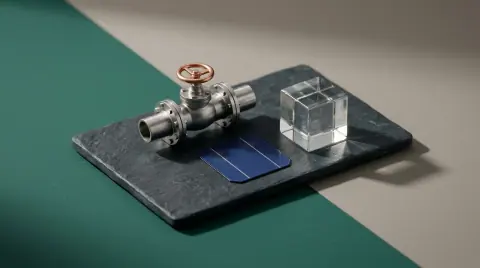
AI-generated editorial illustration: a natural layered sedimentary and basalt rock specimen, a miniature machined titanium drill bit on a rectangular brass cradle, and a clear optical glass cube with a warm amber core on flat split limestone symbolize geothermal subsurface engineering and supercomputing digital twins, not a field site or laboratory photograph.
Physics-Informed AI Shifts Fractured Subsurface Reservoir Engineering from Descriptive to Predictive
Recovering reliable energy from deep geological formations requires navigating fracture-dominated, highly heterogeneous reservoirs where coupled biogeochemical, geomechanical, and hydrologic processes cannot be directly observed. As outlined in DOE's subsurface strategic assets roadmap, AI architectures capable of reasoning under extreme uncertainty are being trained on seismic, geochemical, biological, and hydrologic datasets to link molecular-scale fluid-rock interactions directly to field-scale resource performance1.
To guide reservoir characterization, directional drilling, stimulation, and production in real time, DOE is integrating flagship National Laboratory toolkits: the SMART Initiative (Science-informed Machine Learning for Accelerating Real-Time Decisions in Subsurface Applications), the National Energy Technology Laboratory's Energy Data eXchange (EDX) Discover, Lawrence Berkeley National Laboratory's TOUGH groundwater and heat simulation suite, GeoDTi, GEOS, PFLOTRAN, and ATS1. Combining surrogate models with live operational sensor streams aims to unlock domestic geothermal baseload resources, improve hydrocarbon and coal-bed methane recovery efficiency, lower consumer electricity prices, and support industrial reshoring1.
Five Strategic Pillars Align 33 National Challenges to Compress Discovery-to-Deployment Timelines
Subsurface engineering anchors a broader federal computing strategy detailed in the companion Collection: National Science and Technology Challenges, which structures 33 high-impact initiatives across five pillars: Helping Americans Live Longer, Healthier Lives (4 challenges), Building American Industrial Strength (5), Delivering Reliable Infrastructure and Energy Affordability (7), Extending the Frontiers of American Discovery (8), and Protecting the Nation from Emerging Threats (9)2.
Across the industrial and energy infrastructure pillars, DOE pairs subsurface asset development with securing domestic critical minerals supply chains, recentering microelectronics manufacturing, managing data center energy loads, accelerating nuclear reactor deployment and fusion digital convergence, transforming nuclear cleanup, predicting water for energy, and scaling the electric grid2. Meanwhile, frontier discovery initiatives — including AI-driven autonomous laboratories and predictable-functionality materials design — target compressing materials commercialization workflows from decades down to months or a few years2.
Converging Exascale Simulation and Field Telemetry to De-Risk Baseload Energy Investment
Viewed together, the two November 13 Genesis Mission documents signal a shift away from siloed domain software toward unified, physics-constrained AI foundation workflows spanning the entire U.S. National Laboratory complex12. For capital-intensive deep geothermal and unconventional reservoir projects, real-time digital twins directly mitigate subsurface drilling risk before major capital is committed1.
By linking archival experimental repositories, exascale supercomputers, and autonomous laboratory pipelines with industrial and grid deployment needs, DOE is positioning computational science as a direct multiplier for domestic baseload energy security and manufacturing competitiveness12.