ASEAN puts cross-border power at the centre of its energy-security push
ASEAN’s new energy outlook links regional integration to fuel-supply risks. The 2030 renewable targets date to 2025, while a Philippine oil reserve remains a plan for end-2027.
By Global Bole News
Research and compilation
ASEAN energy cooperation is addressing two pressures at once: immediate risks to fuel supplies and long-term growth in electricity demand. A joint statement published on October 8 from the 44th ASEAN Ministers on Energy Meeting placed reliable supply, regional connectivity, investment and the energy transition on a shared agenda. The meeting itself took place on October 7 in Pasay, Metro Manila, in the Philippines. The ninth ASEAN Energy Outlook, published and launched on October 8, puts regional cooperation at the centre of efforts to make the energy system less vulnerable.12
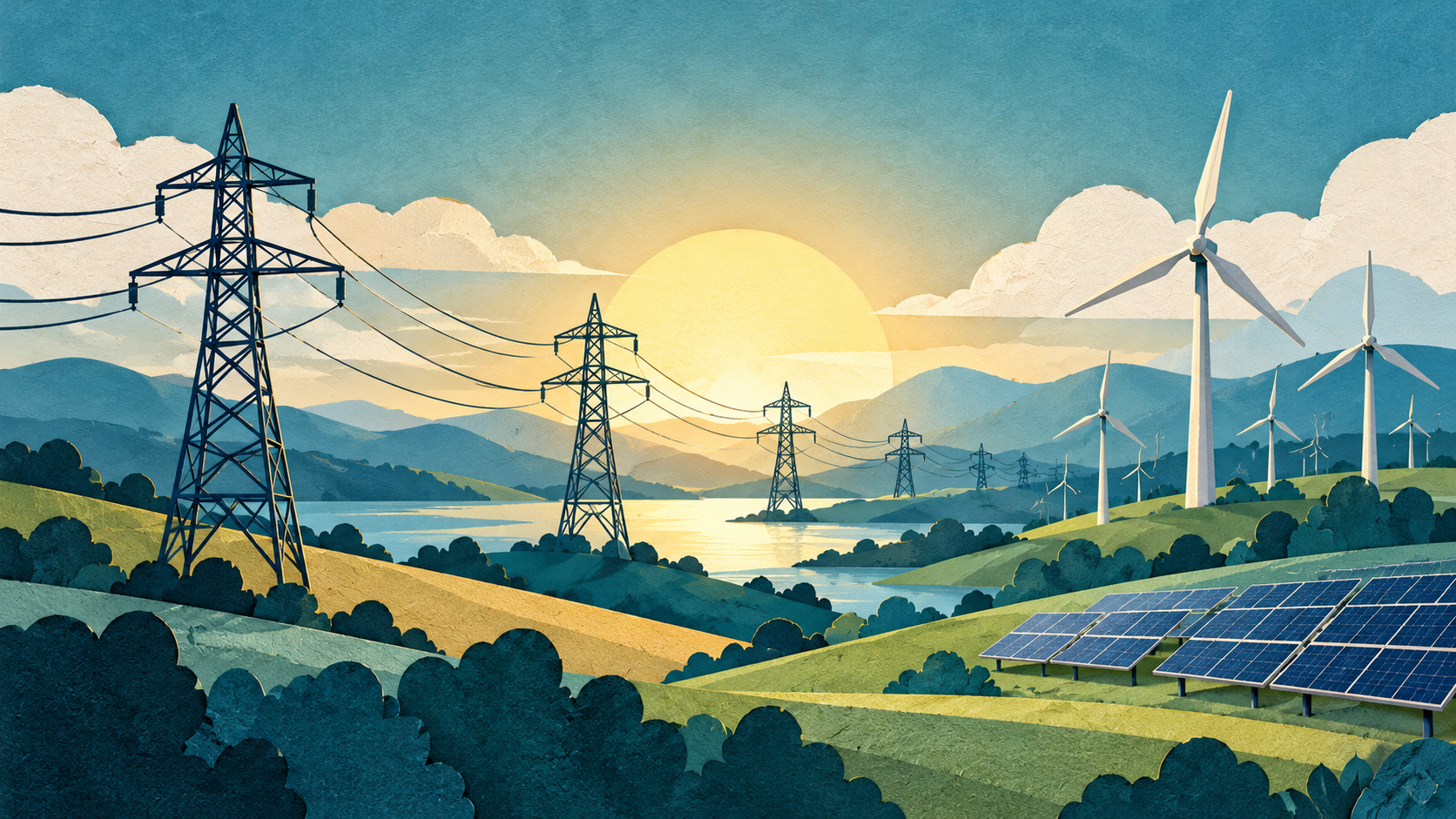
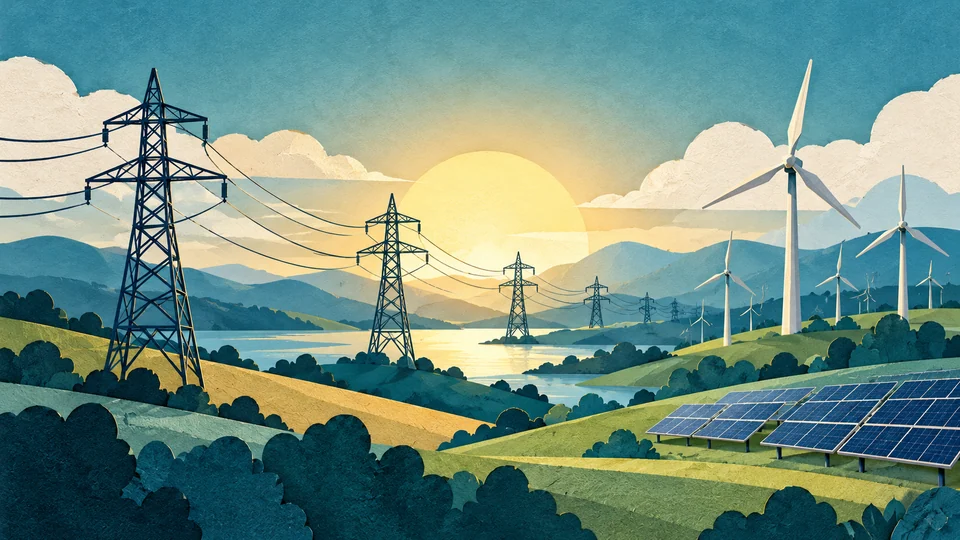
AI-generated illustration: transmission lines, wind turbines and solar panels represent regional grid cooperation and energy security; this is not a real location or a completed project.
Pathways rather than firm predictions
The ASEAN Centre for Energy’s report uses historical data from 2005 to 2024 and extends its analysis to 2060. It compares three scenarios: continuation of current trends, delivery of stated national targets, and a more coordinated regional transition. The report describes internally consistent pathways under particular assumptions, rather than firm predictions of future outcomes. Cross-border electricity trade, efficiency and investment cooperation distinguish the coordinated scenario from countries pursuing their policies separately.2
That distinction matters when interpreting grid construction. An interconnector does more than add a transmission route: it allows markets to share sources of electricity and balancing resources. Yet a low-cost combination in a model still requires actual projects, trading arrangements and financing. Regional cooperation expands the options; individual countries still have to deliver the infrastructure.
The 2030 targets were agreed last year
Renewables supplying 30% of total primary energy and representing 45% of installed generating capacity are not new pledges from this meeting. Ministers endorsed them on October 16, 2025, alongside a 40% reduction in energy intensity relative to 2005, under the ASEAN Plan of Action for Energy Cooperation 2026–2030. Primary energy supply includes uses outside electricity, while installed capacity measures equipment capacity. Neither can simply be substituted for renewables’ share of actual electricity generation.3
The new outlook makes the implementation challenge concrete. Reaching the 45% renewable-capacity target in 2030 requires roughly 26 gigawatts of renewable additions annually, about four times the pace of the past decade. In its coordinated-transition scenario, cross-border interconnection grows approximately twentyfold by 2060 and electricity exchanged between the grid’s sub-regions grows about twelvefold. These describe changes within a modelled pathway, not approved projects or financing already secured.2
Oil reserves offer a separate buffer
Grids and renewable energy involve medium- and long-term construction. Fuel-supply risks also need a more immediate buffer. Reuters reported on October 8 that Philippine Energy Secretary Sharon Garin said the country planned to establish a national oil reserve by the end of 2027, potentially converting it into a regional stockpile later. Whether to host regional inventories and how to set sales terms would remain decisions for the countries concerned. This is an announced plan, not a completed storage facility.4
Reserves and alternative energy serve different purposes. More inventory can buy time during a short disruption; efficiency and electrification can gradually reduce oil demand in some sectors. Even with a cleaner electricity mix, changing transport and other fuel uses takes time, making parallel action on both fronts necessary.
Turning shared goals into a working regional market
Taken together, the meeting’s agenda and the outlook suggest that energy security and emissions reduction are becoming two aspects of the same investment programme. Meaningful progress will involve connecting new renewable projects, developing reliable cross-border electricity trade and turning reserve plans into stocks that can actually be dispatched.
Coordination has practical limits. Connecting more electricity sources requires decisions on transmission allocation, supply responsibilities and cost sharing. Expanding oil storage involves procurement, stock rotation and emergency-access conditions. Those details determine whether shared commitments will help during price swings or supply disruptions. October’s development is ASEAN’s effort to translate existing goals into coordinated action, rather than another announcement of the 2030 percentages.
Source notes
-
2026-10-08 · Joint Media Statement of The Forty-Fourth ASEAN Ministers on Energy Meeting (44th AMEM) · ASEAN; meeting held on 2026-10-07. ↩
-
2026-10-08 · The 9th ASEAN Energy Outlook · ASEAN Centre for Energy; historical data for 2005–2024, scenarios extending to 2060. ↩ ↩2 ↩3
-
2025-10-16 · ASEAN Ministers Endorse APAEC 2026–2030 to Advance Regional Energy Cooperation · ASEAN Centre for Energy. ↩
-
2026-10-08 · Asia races to stockpile oil, speed up renewables in response to Iran war · Reuters via MarketScreener; updated at 10:40 am US Eastern time that day. ↩