China's October CPI Rises 0.7% While PPI Jumps 5.7% Amid Upstream Energy and Memory Chip Cost Surge
Official figures released on November 9 show China's October consumer price inflation easing to 0.7% year-on-year while factory-gate inflation accelerated to 5.7%, driven by coal, oil, and a sharp pass-through of memory chip costs into consumer electronics.
By 全球伯乐 News
Research and compilation
On this page
Food Price Declines Offset Fuel and Consumer Hardware Increases as Core CPI Holds at 0.8%
Monthly price statistics published by the National Bureau of Statistics of China (NBS) on November 9, 2026, showed that the national Consumer Price Index (CPI) rose 0.7% year-on-year in October, easing by 0.2 percentage points from September, while month-on-month readings flattened to 0.0% after a 0.3% gain the prior month; over the January–October period, headline CPI averaged 0.9% higher than a year earlier1. Core CPI, which excludes food and energy, increased 0.8% year-on-year, moderating by 0.2 percentage points from September and confirming that broad household demand inflation remains subdued12.

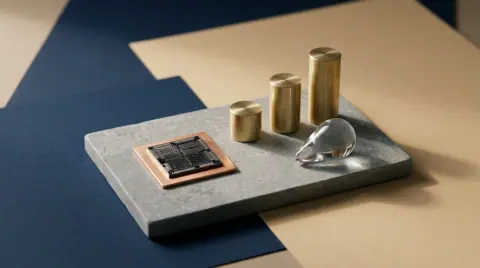
AI-generated editorial illustration: matte black polyhedral mineral models on a basalt tray opposite a solid-state memory chip module and terracotta cup separated by a brass bar represent upstream industrial and retail price divergence, not a real factory or store.
Beneath the headline moderation, October's consumer price basket revealed a striking divergence between falling food costs and surging digital hardware prices. Food, tobacco, and alcohol prices fell 1.5% year-on-year, dragged down by steep declines in fresh vegetables (-16.9%), pork (-8.6%), and fresh fruit (-3.8%), whereas domestic gasoline prices jumped 22.4% year-on-year (up 4.2% month-on-month), lifting overall energy inflation to 9.9%12. Most notably, non-energy industrial consumer goods rose 1.2% year-on-year as higher upstream memory chip costs passed directly into retail electronics: prices for data storage devices, tablet computers, personal computers, and mobile phones surged 45.4%, 29.3%, 23.0%, and 16.7% year-on-year respectively, collectively adding roughly 0.26 percentage points to headline CPI growth, while gold jewelry prices fell 5.9% month-on-month and saw their annual gain narrow by 18.0 percentage points to 4.5%2.
Factory-Gate Inflation Accelerates to 5.7% on Coal, Oil, and AI Computing Hardware Demand
In sharp contrast to restrained retail inflation, China's Producer Price Index (PPI) climbed 5.7% year-on-year in October, accelerating by 0.7 percentage points from September, while rising 0.7% month-on-month; the Industrial Producer Purchase Price Index (PPIRM) rose even faster at 7.9% year-on-year and 1.1% month-on-month3. The split between industrial inputs and consumer-ready goods widened further: producer prices for means of production jumped 7.4% year-on-year—led by a 27.9% surge in mining and quarrying, an 11.6% rise in raw materials, and a 3.5% increase in processing industries, contributing 5.51 percentage points to overall PPI growth—while factory-gate prices for daily consumer goods edged down 0.1% year-on-year, leaving a 5.0-percentage-point gap between PPI and CPI32.
Sector-level breakdowns indicate that imported energy costs, winter coal restocking, and artificial intelligence hardware demand jointly propelled upstream and midstream factory prices. Coal mining and washing prices surged 36.6% year-on-year (+2.7% month-on-month), oil and natural gas extraction climbed 35.0% (+6.0% month-on-month), refined petroleum and nuclear fuel processing rose 29.9%, and chemical raw materials and products increased 16.4%32. At the same time, booming AI computing infrastructure demand and capacity governance supported a 5.9% year-on-year increase in computer, communications, and other electronic equipment manufacturing (+0.1% month-on-month) and a 6.2% rise in electrical machinery and equipment manufacturing (+0.1% month-on-month), while automotive manufacturing prices stabilized month-on-month after three consecutive monthly declines32. NBS methodological notes also specify that starting in January 2026, both CPI and PPI shifted to a 2025 base year, an adjustment that affects monthly year-on-year CPI and PPI readings by an average of roughly 0.06 and 0.08 percentage points respectively; with industrial purchasing costs (+7.9%) outpacing factory-gate selling prices (+5.7%), midstream and downstream manufacturers continue to face margin compression alongside selective hardware price pass-through132.
Source notes
-
2026-11-09 · 2026年10月份居民消费价格同比上涨0.7% · National Bureau of Statistics of China (NBS). ↩ ↩2 ↩3 ↩4
-
2026-11-09 · 国家统计局城市司首席统计师董莉娟解读2026年10月份CPI和PPI数据 · National Bureau of Statistics of China (NBS). ↩ ↩2 ↩3 ↩4 ↩5 ↩6 ↩7
-
2026-11-09 · 2026年10月份工业生产者出厂价格同比上涨5.7% 环比上涨0.7% · National Bureau of Statistics of China (NBS). ↩ ↩2 ↩3 ↩4 ↩5